Updated: November 14, 2026
In the spring of 1945, the Second World War ended in Europe, and the Allies had won. American, British, and Soviet soldiers met in the middle of a ruined Germany, shook hands, and posed for photographs. They had fought the same enemy for four years. Within months, that alliance was coming apart. The victors did not agree on what the peace should look like, and the world was about to split in two.
The Iron Curtain
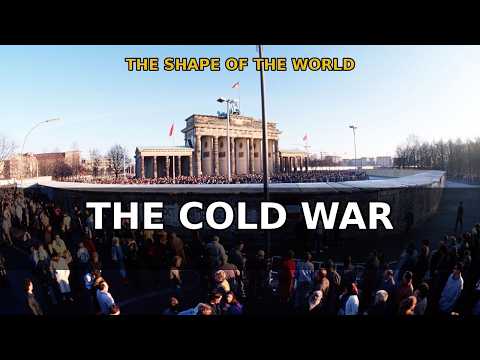
Nowhere was the split sharper than in Berlin. Germany had been divided into four zones, one for each of the main Allies, and its capital, Berlin, was divided the same way, even though the city sat deep inside the Soviet zone. In 1948, the Soviets blocked all road and rail access to the western half of the city. The Western Allies answered with the Berlin Airlift, flying in food, coal, and medicine for almost a year, until the blockade was lifted in 1949. The pressure on Berlin did not stop there. By 1961, about three and a half million East Germans had fled to the West through Berlin, and on the night of August 12th to 13th, East German troops sealed the border and began building a wall. The Berlin Wall ran through streets, parks, and apartment blocks. Families woke up divided by concrete, and for 28 years the Wall stood as the most famous symbol of a divided world.
Proxy wars and the closest call
With a direct war too dangerous to fight, the superpowers fought each other through other countries. These were called proxy wars, and Korea was the first. Korea had been divided after the war into a communist north and a pro-Western south. In June 1950, North Korea invaded the South. American-led United Nations troops fought on one side, and Chinese troops fought on the other, while the Soviet Union supplied the North. Three years later, the war ended in an armistice, with Korea still divided, almost exactly where it had started.
The closest the world ever came to nuclear war happened in 1962, over an island 90 miles from Florida. American spy planes photographed Soviet nuclear missiles being built in Cuba. The missiles could reach American cities in minutes. President John F. Kennedy ordered a naval blockade of the island, which he called a quarantine, and demanded the missiles be removed. For thirteen days in October, the two sides stared each other down, and the world waited to see who would blink first. The crisis ended with a quiet deal made out of public view. The Soviet leader, Nikita Khrushchev, agreed to take the missiles out of Cuba. In return, the United States promised not to invade Cuba, and secretly agreed to remove its own missiles from Turkey. A few months later, the two sides set up a direct telephone link, the hotline, so their leaders could talk in a crisis instead of guessing what the other side meant. The world had come closer to nuclear war than ever before, and both sides knew it.
The Space Race and everyday life
The rivalry also played out in space, where the whole world could watch the score. In October 1957, the Soviet Union launched Sputnik, the first artificial satellite, a metal sphere about the size of a beach ball, beeping as it circled the Earth. Americans were shocked. If the Soviets could put a satellite in orbit, they could build a missile that could reach America. The Space Race had begun, and it was fought on television as much as in secret. The Soviets scored the early victories. They sent the first person into space, Yuri Gagarin, in April 1961. President Kennedy answered by promising to land a man on the Moon before the decade was out. On July 20th, 1969, Apollo 11 did it, and Neil Armstrong and Buzz Aldrin walked on the Moon while hundreds of millions of people watched on television. The Moon landing was a scientific triumph, and it was also a Cold War message, broadcast live to the world.
1989, the Wall falls
Here is the remarkable thing about how it ended. After 45 years of standoff, proxy wars, and nuclear fear, there was no final battle between the superpowers. No great clash of armies, no last missile launch. The Cold War ended the way it had been fought, without the two sides ever meeting on a battlefield, because one side's system collapsed from within, while the other was still standing. So what was the Cold War? It was a 45-year standoff between two superpowers who were too afraid of each other's weapons to fight directly. It divided a continent, built a wall through a city, fought wars in Korea and Vietnam, came within days of nuclear war over Cuba, raced to the Moon, and crept into school drills and backyard shelters. It shaped the world we live in now, from the map of Europe to the satellites above our heads. The Wall came down, the Soviet Union dissolved, and the world moved on, but the questions the Cold War raised have never quite gone away. How do rival powers live side by side without fighting? And who keeps the peace when nobody trusts anybody?
Sources and further reading
The facts behind this episode, from the sources that tell the story best.
Keep reading
Two books that go with this episode. If you buy through these links, the site may earn a commission at no extra cost to you.
The Cold War: A New History
A short, readable history of the whole Cold War by its leading historian, the natural next step after the episode.
See it on AmazonThe Cold War: A World History
The Cold War as a global story, including the proxy wars and decolonization the episode covers.
See it on AmazonPrefer audiobooks?
Prefer audiobooks? Try Audible free for 30 days: https://link.amazon/A0gz5Cuo8
As an Amazon Associate, I earn from qualifying purchases.